
In early 2022, Team Vitality widened its Indian mobile esports portfolio by entering Free Fire and Battlegrounds Mobile India, adding two title-specific projects to an existing Call of Duty Mobile presence. The expansion gave the global organization three mobile teams in India and made clear that the country had become a strategic priority rather than a side market. Viewed from 2026, the announcement stands as an early example of a major esports brand treating Indian mobile competition as a multi-title, long-term play.
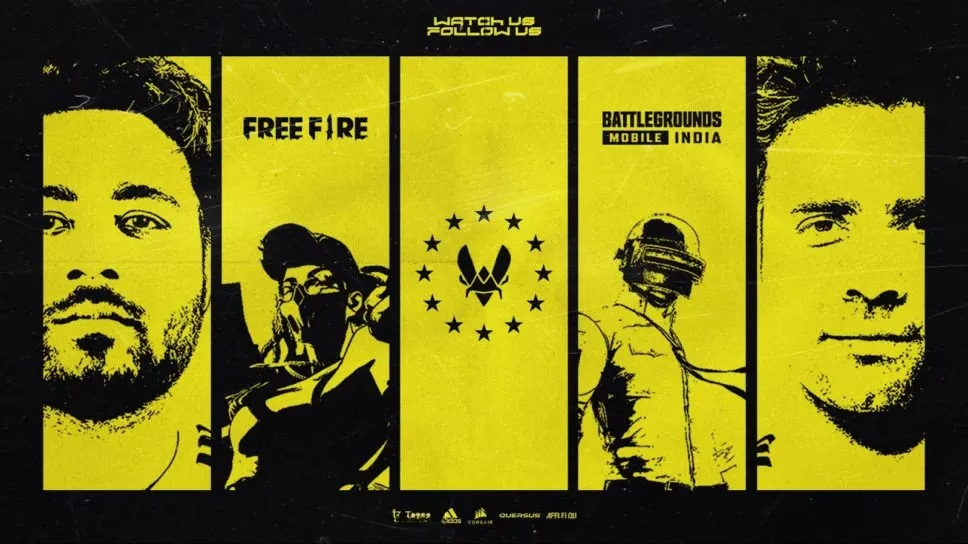
At the center of the Free Fire project was Indranil FABINDRO Saha, appointed as in-game leader. The former TSM and Sixth Sense player brought a resume that included the Free Fire Tri Series and the Esports Premier League 2021. Vitality framed the hire around leadership as much as firepower: an IGL with big-match experience could shape rotations, mid-game calls and player development. Saha described the move as a dream come true and said he already had talented players in mind for a winning team. He also predicted that the squad would make a mark in domestic and international Free Fire tournaments.
Free Fire's scale explained the interest. The Garena-owned title was the most-downloaded mobile game in the world in December 2021, according to the reference account, and its Indian audience was enormous. For Vitality, entering Free Fire was a way to tap a mass-market mobile shooter with a deep content and tournament ecosystem. The title's accessibility on lower-cost devices also fit India's mobile-first gaming profile.
On the BGMI side, Vitality appointed Pratik AURUM Mehra as coach. Mehra had represented India at international events in Bangkok, Kuala Lumpur and China, and he had led Fnatic to the PUBG Mobile All-Stars Championship title in 2019. His role was different from Saha's: rather than calling plays inside a match, he would be expected to build structure, review scrims, manage player roles and translate international standards into a domestic context.
| Title | Key figure | Role | Core rationale |
|---|---|---|---|
| Free Fire | Indranil FABINDRO Saha | In-game leader | Championship experience and player leadership |
| BGMI | Pratik AURUM Mehra | Coach | International reps and title-winning coaching pedigree |
| CoD Mobile | Existing Vitality India squad | Established team | A base for a three-team mobile portfolio |
The timing reflected a broader shift in India. PUBG Mobile's ban had reshuffled the mobile shooter market, allowing Call of Duty Mobile, Free Fire and the newly released BGMI to compete for attention and talent. International organizations such as Vitality and TSM were expected to bring coaching systems, player welfare practices and content infrastructure that could professionalize the domestic scene further. Vitality's 2018 investment of $22.7 million from Indian entrepreneur Tej Kohli had already signaled a long-term Asia strategy, with India at its center. The organization also fielded League of Legends and CS:GO teams, and its CS:GO roster was among the best in the world.
Vitality's leadership presented the mobile push as part of a wider 2022 start that included high-profile CS:GO and League of Legends roster reveals and a multi-year partnership with Tezos. The CEO, Nicolas Maurer, highlighted the popularity of Free Fire and BGMI in India and said the organization looked forward to seeing Vitality teams dominate the region and beyond. Randall Fernandez, managing director of Team Vitality India, said the organization prioritized people who shared its mindset. He described the arrivals of AURUM and FABINDRO as a major step in strengthening Vitality's position in the country, adding that existing athletes, a training and streaming facility and the brand's esports pedigree gave the org confidence to target top rankings in India and internationally.
One important caveat hung over the announcement: Vitality had not yet revealed its complete Free Fire and BGMI rosters. That left the competitive ceiling unknown. A strong IGL and an experienced coach are foundational pieces, but mobile esports success also depends on player chemistry, meta adaptation, scrim discipline and tournament seeding. The 2022 reveal was therefore an opening move, not a finished product.
By 2026, the Indian mobile esports market has continued to evolve, with title popularity, regulation and tournament structures shifting over time. That makes the Vitality announcement a useful case study. The organization did not simply sign a single roster; it built a multi-title mobile portfolio around local leadership and international coaching know-how. For global brands evaluating India, the lesson remains relevant: sustained credibility comes from infrastructure, patience and title-specific expertise, not from a one-off headline. The full competitive outcome would be decided by results on stage, but the strategic intent was unmistakable. ✅
Data referenced from Esports Charts helps frame why a three-title mobile strategy in India made strategic sense for Team Vitality in 2022, as audience metrics, tournament visibility, and regional engagement patterns often determine whether an organization treats a market as experimental or foundational. In that context, expanding across Free Fire, BGMI, and Call of Duty Mobile suggested a deliberate attempt to build sustained relevance through multiple competitive ecosystems rather than relying on a single roster bet.