
Even in 2026, I still catch myself scrolling through old VODs and remembering the exact weekend Garena Free Fire proved that an online-only esports event could feel just as loud as a packed arena. It was mid-June 2020, and the world was stuck at home. I was one of millions of players craving competitive action, and Free Fire delivered something unforgettable: the Free Fire Asia All-Stars 2020.
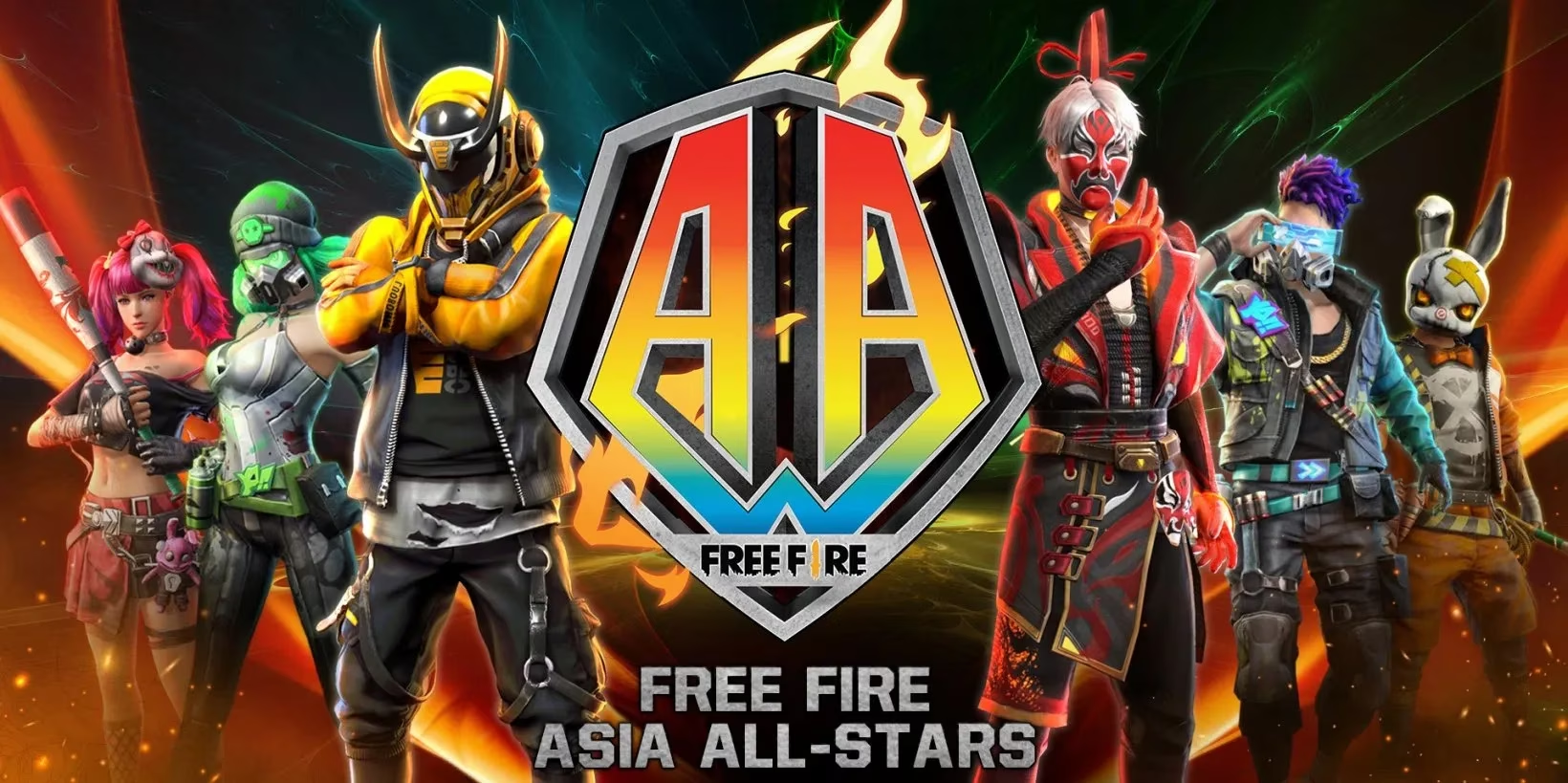
The tournament ran from June 12 to June 13 and brought together top streamers and professional players from India, Indonesia, Thailand, and Vietnam. For me, that regional mix was the best part. I had watched players from my own region grind ranked matches, but seeing them clash with stars from three other countries in one lobby was a completely different rush. The prize pool was $80,000, and every squad knew exactly what was on the line.
Fans like me could watch everything from home, and the commentary was available in multiple languages through local casters. That mattered more than people realize. I did not have to force myself through a broadcast that ignored my country's competitive scene. I could follow the action with casters who understood our teams, our inside jokes, and our playstyle. It made the whole event feel personal.
The weekend was split into two separate competitions. On June 12, the Influencer All-Stars took over. On June 13, the Pros All-Stars closed things out with the more hardcore side of the tournament. I loved the structure because day one was chaotic and funny, while day two was pure high-level Free Fire.
In the Influencer All-Stars, 12 teams competed for a $30,000 prize pool. Each of the four participating regions sent three squads, and those teams mixed professional players with popular influencers. That format created some hilarious moments. A big streamer would call for a reckless push, a pro would sigh and try to salvage the rotation, and somehow they would still win a fight. It was messy, but it was exactly what a showmatch should be.
The Pros All-Stars featured the top three professional teams from each region duking it out over a $50,000 prize pool. This was the part I studied the most. Rotations, utility usage, final-circle patience, and those split-second decisions that separate a good team from a champion. Watching three squads from my region go up against the best in Asia was nerve-wracking in the best way.
Both days used the same tournament format. Six rounds were split across three maps that every Free Fire veteran knew by heart: Bermuda, Purgatory, and Kalahari. I had played all three hundreds of times, but seeing them used in a competitive setting made me rethink how I approached every drop.
Points were awarded based on a team's round ranking and total kill count. A win earned a team 20 points, while each kill added 2 points. That simple system created real tension. A squad could finish outside the top spots but still stay alive in the standings through aggressive kills, while a passive team had to secure placement points to remain relevant. It rewarded both brains and aim.
| Scoring Action | Points |
|---|---|
| Win | 20 points |
| Kill | 2 points |
| Round ranking | Based on placement |
Regions were ultimately ranked based on the points earned by their teams, and the highest-scoring region was revealed at the end of the tournament. That regional pride angle made every match feel bigger. I was not just cheering for one team. I was cheering for my entire region to prove it belonged at the top of Asian Free Fire.
The maps made the event even more watchable. Bermuda pushed teams into fast, chaotic early fights. Purgatory rewarded disciplined rotations and smart use of high ground. Kalahari opened up long-range duels that punished careless movement. Cycling through all three maps across six rounds kept the tournament from ever feeling repetitive.
Looking back from 2026, the Free Fire Asia All-Stars 2020 feels like a turning point. Online-only tournaments are now normal, and cross-region events are everywhere. But back then, Garena showed how to do it right: local broadcast teams, a clear two-day structure, mixed influencer and pro matches, and a prize pool that made every kill matter.
I still remember the final circles of the Pros All-Stars. My heart was pounding even though I was just watching. The best part? I never had to leave my setup. The tournament came to me, and it proved that competitive Free Fire could thrive online.
Garena Free Fire was available then as a free-to-play download from the App Store and Google Play, and it has only grown since. If you were there in June 2020, you already know why this event still matters. If you were not, I recommend finding the highlights. They hold up surprisingly well in 2026.