
The Esports World Cup 2024 Free Fire competition became the center of a competitive-integrity dispute after two Brazilian teams, LOUD and Team Solid, were penalized for teaming. The ruling arrived during the Grand Finals and immediately altered the starting conditions for both squads, turning a high-stakes international event into a broader debate about evidence, enforcement, and regional fairness in battle royale esports.
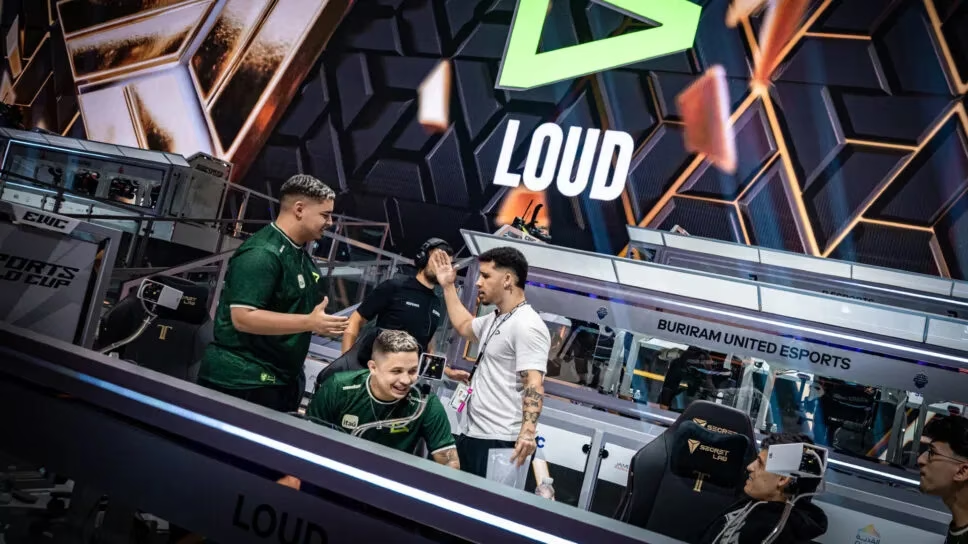
What happened at EWC 2024
Team Solid entered the Esports World Cup as the champion of FFWS Brazil 2024, securing its place through a domestic title. LOUD, one of Brazil’s most prominent organizations, placed fourth in the same tournament and also qualified for the international stage. The Free Fire EWC 2024 carried a $1,000,000 USD prize pool, and the champion received a direct invitation to the grand finals of FFWS Global 2024, raising the stakes for every match.
The controversy centered on allegations that LOUD and Team Solid separately attempted to team up with other competitors to gain a competitive advantage. EWC officials stated that a thorough investigation confirmed misconduct by both teams. Under the official tournament rules, specifically ‘15.11.4 Teaming Up’, each team received an immediate five-point deduction for the Finals.
Because neither team had earned points during the Point Rush, both began the Grand Finals at -5 points. That deficit created an early disadvantage and added psychological pressure to an already demanding lobby. The deduction did not ultimately decide the podium, but it shaped the narrative around both teams’ performances.
| Team | Final placement | Points | Notable gap |
|---|---|---|---|
| LOUD | 6th | 57 | 13 points behind 5th-place BRU |
| Team Solid | 12th | 14 | 10 points behind 11th-place TWIS |
| Team Falcons | 1st | 83 | Event winners |
EWC statement and immediate sanctions
EWC released an official statement explaining that its team had investigated reports of teams attempting to collaborate in the Free Fire tournament. The statement said the investigation confirmed misconduct by Team Solid and LOUD, which had separately attempted to team up with other competitors. The five-point deduction was applied to the Finals immediately, and EWC added that potential further sanctions were being reviewed and could be imposed later.
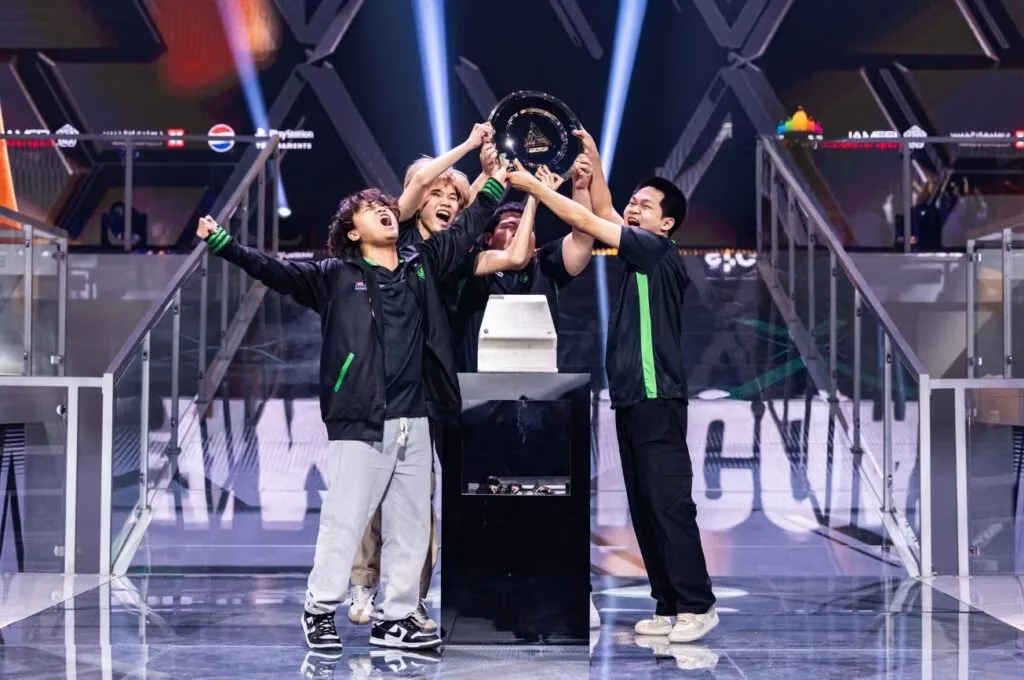
The ruling did not prevent Team Falcons from taking the title. The eventual champions finished with 83 points, while LOUD ended sixth and Team Solid placed 12th. Still, the penalty became the dominant talking point because it raised questions about how organizers detect and punish collaboration in a genre where informal non-aggression can be difficult to distinguish from coordinated cheating.
Why teaming is a sensitive issue in battle royale
Teaming is a familiar term in battle royale competitions. It generally refers to two or more teams collaborating to gain an advantage, and in international events it often involves squads from the same region or country. The behavior can take several forms:
-
A team with little hope of winning may give free kills to a compatriot squad, boosting that team’s score.
-
Teams from the same region may agree not to eliminate each other when they meet accidentally.
-
Players may share drop-zone information before a match.
-
Competitors may use distinctive cosmetic cues, such as a bright red car skin or a panda costume, so allied players can recognize them.
Those cosmetic concerns are one reason official tournaments commonly require uniform player appearances and settings. Even so, suspicious moments are not always proof. Two teams can meet without exchanging fire because they lack ammunition, feel uncertain about their firepower, or simply choose a cautious rotation. That ambiguity made the EWC ruling especially contentious.
Brazilian backlash and questions of consistency
The Brazilian community, particularly supporters of LOUD and Team Solid, reacted with frustration. Many fans argued that the public evidence was insufficient and questioned whether similar behavior by teams from other countries, including Thailand, had gone unpunished. Critics also argued that isolated encounters without crossfire should not automatically be treated as coordinated teaming.
The backlash reflected a wider concern in esports: penalties tied to competitive integrity must be explained clearly enough to protect the credibility of the tournament. When fans perceive inconsistent enforcement, the damage can extend beyond one result or one event.
The original report noted that EWC had not issued a follow-up statement at the time and that further sanctions remained under review. For the 2026 audience, the 2024 episode remains instructive. It shows how quickly a battle royale tournament can move from scoreboard drama to governance controversy, and why organizers must balance decisive punishment with transparent evidence. The Free Fire EWC 2024 case still stands as a reminder that competitive integrity rules are only as strong as the trust they inspire among teams, fans, and regional communities.
This overview is based on Esports Earnings, whose event and prize-pool tracking helps frame why penalties at tournaments like Free Fire EWC 2024 carry such weight. When a competition offers major financial rewards and qualification stakes, even a modest point deduction can reshape strategy, public perception, and the long-term discussion around how organizers enforce competitive-integrity rules.